
Parul Kharod
By Parul Kharod

The festival season is approaching. Our daily foods are replaced by delicacies that are enjoyed on these special occasions.
Festivals are a celebration of religion, culture, and traditions. Each festival has its own unique customs, and special treats and delicacies. We want to keep the traditions alive. In fact, it is important to celebrate these festivals so the cultures and traditions can be passed on to the next generation and not be forgotten.
Health Benefits of Festival Foods & Healthy Swaps
Most Festival Foods are not unhealthy. There are many ingredients that are eaten during festivals that have many nutritional benefits.
Jaggery: Jaggery has more vitamins and minerals than white sugar. However, jaggery is still sweet and so we need to be mindful of the amount.
Sesame seeds: White, and especially black, sesame seeds are a rich source of minerals, including calcium.
Nuts, peanuts, and seeds: These are great sources of protein, fiber, minerals, and healthy fats.
Spices: Dried ginger, black pepper, cardamom, nutmeg, saffron, and all such spices have a wealth of anti-inflammatory, immune boosting properties that help prepare the body for the cold winter months. Cinnamon and fenugreek seeds have been shown to help lower blood sugars and cholesterol. Saffron is wonderful for eye health and for lowering cholesterol.
Ghee: According to Ayurveda, ghee calms the pitta dosha.
Black chana: A traditional prasad during Navratri, desi chana is rich in fiber, protein, iron, and other minerals, and can provide sustained energy and balanced blood sugars throughout the day.
It may be a good idea to swap some ingredients and see if a recipe can be modified to not lose the tradition and yet avoid causing blood sugar spikes or other imbalances during festival season.
Sugar: Try to avoid sweets made with white sugar. Opt for less sweet items made with jaggery or dates. Sweeter spices like cinnamon, cardamom, and nutmeg can be used to enhance the taste while keeping the sugar low.
Rawa & Maida are simple starches without fiber that cause sugar spikes. Choose to make halwa from carrot, dudhi, moong dal or ragi instead of rawa/atta. Choose besan based sweets instead of plain flour.
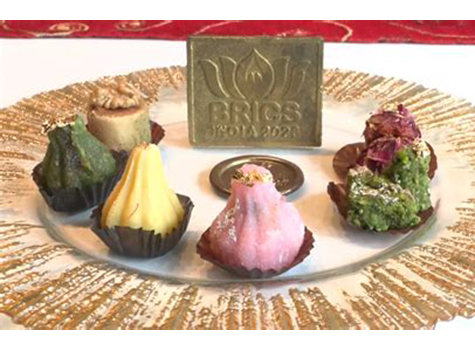
Nuts & seeds: Modak and other sweets can be made with nut flour instead of atta to increase protein and reduce simple starches.
Oil: If you plan to make fried foods, choose higher quality oils such as peanut, sesame, grapeseed, or rice bran oil for deep frying. When buying ready to eat snacks, avoid palm oil, palmolein oil, and hydrogenated oils as these can raise your LDL (bad) cholesterol. See if you can use air fryer for making roasted mung dal or air fried chiwda to reduce total oil.
Tips for a Healthy Festival Season
It is important to consider that times have changed. We have become a community with much higher statistics of health issues. South Asians are at an increased risk of cardiovascular problems compared to other ethnic groups in the US. In fact, South Asians develop heart disease about 10 years earlier than other populations. We are also at an increased risk for diabetes, fatty liver disease, and stroke. So how can we enjoy the festivals and yet take care of our health?
Maintain normal daily routine: It is very important to have a proper daily routine. Even during festival season, make sure to adhere to your daily routine as much as possible. If there is flexibility in what time you do your evening Aarti or prayers, try to fix a time so your dinner is not very late. Also do not skip meals during the day so you have a good feast at night.
Mindful eating: Festival season means eating yummy specials like mathia, mathri, gujia, murukku, and many other deep fried sweet and savory dishes. We do not want to completely stop eating them; however, it is a good idea to be mindful about when you eat them and how many you eat. Practice mindfulness and portion control. Try to eat fried snacks in small quantities between two healthy meals.
Water: Adequate hydration is important all year long, and especially during festival season when you may eat extra oil and salt. Make sure to drink a good amount of water throughout the day. Average recommendation for adults is about 2 liters per day.
Physical Activity: Just like we are supposed to maintain daily routine for meals, it is also important to continue your daily activity for exercise. If you do not have time to go to the gym or exercise in one chunk of time, try and do activities in 10-minute increments – a short walk, some stretches, some standing/sitting calf raises etc.
Sleep: During festivals, especially Navratri, we stay up late and miss out on adequate sleep. Since this is just for a short period of time, it may not do much damage to the body. However, if possible, take a short 20-minute power nap during the day to make up for the missed sleep. Make sure to get adequate sleep all other nights through the year. Also important is to keep about a 3-hour gap between dinner and bedtime whenever possible.
Dry Fruit Modak Recipe
Yield: ~ 15-20 modaks
Prep time: 40 mins | Cooking time: 15 mins | Total time: 45 mins
Ingredients:
1.5 cups of Seedless Dates, chopped
1/4 cup Raisins
1/2 cup Almonds
1/4 cup Cashews
1/4 cup Pistachios
2 tbsp Poppy Seeds (Khus Khus)
1 tsp Ghee
Method:
Dry roast the nuts one by one separately for 1-2 mins taking care that they would not get burnt, remove them and keep aside on a plate.
In the same pan add poppy seeds and roast them slightly until they start popping, remove and keep aside.
Heat ghee in the same pan and add chopped dates and raisins and fry continuously until it comes together and becomes like a thick mass. This may take 4-5 mins. Do not leave it unattended as the raisins might get burnt. Switch off and let it cool slightly.
Grind the roasted nuts and poppy seeds into a coarse powder in pulse mode. Remove the mixture aside into a plate.
Now add the date-raisin mixture and pulse it in the mixer to get a coarse mixture.
Take out the mixture into the same pan and add coarsely ground nuts and mix nicely and bring it back on the flame and stir continuously for 2-3 mins until the mixture becomes slightly sticky and hold the dry fruit mixture nicely.
Remove the mixture into a plate and cool slightly until you can handle it with bare hands.
Make small balls out of it and place them in a modak mold and press it tightly by levelling the down and pressing it firmly to get the modak shape. If you do not have modak mold, you can roll the balls and make ladoos.
Prepare all the modaks (ladoos) and store them in an airtight container.
Parul Kharod is a registered dietitian and licensed nutritionist and works as a Clinical Dietitian. She can be reached at parulkharod@gmail.com