
Dr. Maha Gingrich
By Dr. Maha Gingrich
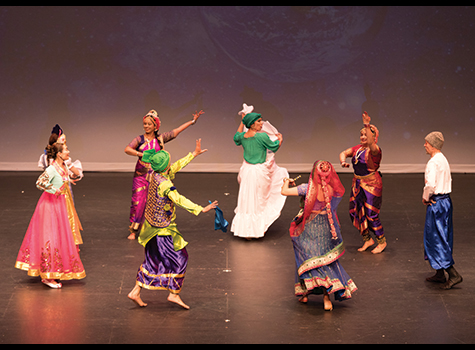
Across the world each year, there are hundreds of cultural festivals that celebrate the unique beliefs and traditions belonging to a specific region. They celebrate through dances, rituals, symbolic costumes, storytelling, prayers, food, just to mention a few.
India is filled with so many different festivals each year, including New Years for each sub-culture. It is almost impossible to experience these festivals in person in each state. If I take Indian festivals into account and add the festivals of the world to that list, it is unbelievable. For those of us who are not local to a particular area, visiting these festivals can be a great way to immerse ourselves in other cultures and join in on unique celebrations for a truly unforgettable experience. As I feel it is almost impossible to attend these celebrations yourself, I thought it would be great just to learn more about other people’s cultural traditions through dance. This year for my Dances of India production I decided to show a glimpse of these festivals and connect them to the cultural festivals around the world.
This has been a fun and exciting journey. As I continue to research world festivals, I see the same theme of my signature dance, “Unity in Diversity”, that is “We are more alike than different”.
This year, we depict through classical and traditional folk dances, many religious festivals such as Diwali, Ganesh Chathurthi, Maha Shiva Rathri, Janmashtami, Holi, Dasara, Baisakhi, just to name a few. Many countries in Asia, South America, Eastern Europe, and others that have great agricultural communities also celebrate harvest festivals and spring festivals.
Some of the festivals like Holi (festival of colors), St. Patrick’s Day, Christmas (festival of lights) are celebrated worldwide. Now a days, irrespective of their background and religion, they take part in these world festivals. Harvest festivals are the most popular festivals, and many aspects of their celebrations are similar. When harvesting rice, grapes, wheat, fruits, or anything else we consume, the celebrations are similar. They all have songs, rituals, unique foods and clothing that are associated with these celebrations. As we know for many countries, harvesting still is the most important livelihood.
During our upcoming Dances of India show, through dance we are sharing the stories of 10 to 14 festivals of India and the world. These include many of the Indian festivals and festivals from other parts of Asia, South America, and Eastern Europe. As I always say, dance has no language barriers. We are delighted to share the stories and the cultures of our beautiful world through dance, props, and costumes. We don’t need to travel the world if we can’t.
Why is this important? Festivals are an integral part of all cultures around the world. These celebrations bring people together to commemorate important events, traditions, and values. They play a crucial role in fostering a sense of community, preserving cultural heritage, and promoting unity among diverse groups of people. These celebrations become a platform to teach and educate our children while sharing and honoring cultural traditions and stories. These events help in passing down customs, rituals, and beliefs from one generation to another, ensuring that they are not lost or forgotten over time.
We can’t forget the inner joy these festivals bring to all of us. They help us travel through the ups and downs of our lives with grace, and creates a sense of belonging, remove loneliness and isolation, build and strengthen our relationships with family and friends. This is our opportunity to transform from an individual into a community, an extended family. When you meet in person, the joy of being together increases exponentially. A virtual celebration cannot replace that experience.
Thousands of years ago, our ancestors figured this out. They introduced and gave us the gift of divine dances, such as Bharatha Natyam, Kuchipudi, Kathak, Kathakali and so on. From these divine dances, the art of story-telling was developed. Then the general communities weaved the stories through community dances and folk dances. The oral tradition through dance was developed to share the stories of our epics and literature to pass on for generations to come.
I am reflecting on these gifts and sharing them through dances with our diverse international audiences. Dances of India offers a platform for different communities to share their unique heritage, customs, and values with others through dance to foster mutual respect and understanding. I hope to offer an opportunity for you and your family to relax and unwind from the stresses of daily life. Taking a break to enjoy dances filled with great music and to share the event with friends and family can help reduce anxiety and improve mental health.
I thank my Gurus and family for imparting this knowledge to me. I am now honored to do the same for my students and my audience. Dances of India will be presented on Sunday, May 31, 2026, at 4 pm at Matthews Community Center near Charlotte, NC.
For questions or comments, contact Dr. Maha Gingrich via email at gingrichmaha@gmail.com.