

Guest Author
By Aadrika Sharma
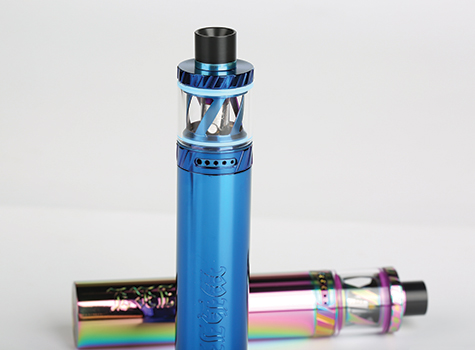
In the spring of his sophomore year of high school, Solomon Wynn, a 15-year-old, came down with bronchitis. He was given antibiotics and steroids by a doctor, but nothing worked. When his family visited the hospital, they learned vaping had destroyed his heart and lungs, eventually leading to his death on June 16, 2023. A once healthy 15-year boy died at the hands of vaping.
Solomon is not alone. Across the US, vaping has become the most used tobacco product, with over 10.1% of high school and 5.5% of middle school students vaping (Jamal, Ahmed. “Tobacco Product Use among Middle and High School Students” — National Youth Tobacco Survey, United States, 2024). In NC alone, 1 out of 8 high school students vape (WRAL. “Gen v: Teen Vaping in North Carolina – Undercover Look at the Growing Epidemic.”), and this highlights how widespread this dangerous habit has become among teens.
E-cigarettes were initially developed in 2003 as a “safer” alternative to smoking. Since their introduction in US markets, their popularity has rapidly spread among youth, with a reported 1129% increase in e-cigarette use among North Carolina high school students from 2011 to 2019 (Kirsten Siebenga. “The Forgotten Epidemic: Youth Vaping during COVID-19.” NCIOM).
JUUL became the most prominent vape brand, soon creating a vaping epidemic in the teens of NC. In 2019, North Carolina sued the JUUL company, leading to a $40 million settlement (nahmed. “Attorney General Stein Reaches Agreement with JUUL for $40 Million and Drastic Business Changes – NCDOJ). While this helped curb vaping, teen vaping remains an issue in NC. To curb North Carolina’s teen vaping crisis, the state must enact stricter regulations and raise the legal vaping age. Simultaneously, schools should implement educational programs to inform students about the dangers of vaping.
The Allure: Why Teens Vape
The reason for vaping popularity in youth can be attributed to the way vapes are advertised. Brands like JUUL, Elf Bar, and others target younger audiences by designing products that appeal to students, such as highlighter-like devices or coffee cup-shaped vapes, as well as appealing flavors such as cherry and cotton candy. Peer pressure plays a significant role in students vaping. Students are given vapes mostly by their friends, and they vape to be seen as “cool”. Vapes cause severe addiction and health issues.
Dr. Balasubramaniam, a pediatric pulmonologist from the UW-Madison hospital, says, “We know these devices are not safe for kids, and we know they can put kids’ lungs at risk of a severe, life-threatening illness”. Vapes contain significantly high levels of nicotine as well as chemicals such as TNC, Diacetyl, and additives. The effects of these vapors are known to cause serious health issues.
One harmful disease caused by vaping is Popcorn Lung, which results from damage and permanent scarring of the smallest branches of airways after inflammation of the lungs. Popcorn Lung has no cure, and can result in coughing, chest pain, wheezing, and trouble breathing.
Loopholes and Legislative Shortcomings
Current government regulations on vaping in North Carolina have been ineffective. For example, the state passed a bill requiring FDA approval for vape sales, but a significant loophole still allows many products to remain on the market. The bill created a registry under the department of revenue so that everyone can see tobacco products which have been approved through the FDA certification process and take illegal products off the shelves (WRAL. “Gen v: Teen Vaping in North Carolina – Undercover Look at the Growing Epidemic.”).
Many NC state leaders, such as State Senator Paul Lowe and Representative Erin Paré, have taken pride in this bill and how it is a step in the right direction. While on the surface this bill seems effective, it fails to close a critical gap: companies who are waiting for FDA authorization and companies denied FDA authorization who have appealed can still sell their products!
This loophole undermines the purpose of this bill and ultimately allows these vape companies to sell their products, no matter how harmful they can be for consumers. This is critical because while our government has acted, these actions are relatively ineffective. This failure enables vape companies to keep targeting youth, worsening the vaping epidemic. Current teen advocates are fighting for the legal age for purchasing tobacco products in NC to change from 18 to 21, complying with federal law. With the legal age higher, younger students will have a harder time getting access to vaping products from older students (especially 18-year-old high schoolers), eliminating a major vape source for teens and ultimately reducing their access to vapes. What’s more, at 18, the young brain is still developing, specifically the prefrontal cortex, which is responsible for decision-making. Due to this, 18-year-olds are not well-equipped to make prudent decisions about vaping, and often take potentially harmful decisions for themselves, such as purchasing and using vapes.
To help reduce vaping, North Carolina can implement effective policies and laws, such as higher taxation on vaping products. States such as Minnesota, Vermont, New Jersey, and California have imposed high taxes on vape products (Minnesota with tax as high as 95% wholesale). In contrast, NC’s tax is a mere $0.05 per mL – one of the lowest in the country (Hoffer, Adam, and Jacob Macumber-Rosin. “How High Are Vaping Taxes in Your State?” Tax Foundation).
When Minnesota’s high taxes were implemented, they saw a significant decline in vaping among teens. Similarly, studies have shown that a 10% increase in the price of tobacco products leads to a 7 to 8.6% decrease in vape use among youth. Since teens usually have limited disposable income, this could be a potential solution, since the increase in price would make it less affordable for teens to buy vape products, stopping the issue before it has even started. Moreover, vape tax revenue can be reinvested into anti-vaping efforts like medical research and prevention initiatives. Regardless of the approach, we need comprehensive solutions, not just superficial fixes, to truly address the core problem.
WCPSS Shortcomings
When looking at Wake County public schools, there are programs implemented to help with teen vaping. Currently, most Wake County schools require a tobacco-free campus and prohibit the use or distribution of tobacco products by employees, students, and visitors (WCPSS Student/Parent Handbook Manual). While this seems effective, most teen vaping does not occur on school campuses, but rather at social venues or living spaces with friends. In addition, vaping devices are so discreet and “student-friendly”, it is easy for students to hide them and sneak them into schools, making the ban relatively useless.
Students often go to great lengths to sneak in vapes due to the addictive nature of nicotine, making it difficult for them to get through the school day without vaping. Arjun Kuncha, a student at Enloe High School, talks about his experience with friends and vaping, stating, “A lot of my friends started vaping in middle school, they would conceal them and then whenever we could go outside for gym, that’s when they would start vaping, and then a circle huddled around them.”
At Green Level High School, 36% of students say that vaping in school is relatively common, and 26% say it is very common (Google Survey by Aadrika Sharma at Green Level High School). This shows that even at Green Level, a vaping ban and other measures taken by the school are relatively useless. When looking at WCPSS Schools, there is no specific standard targeting vaping and its impacts. Most schools focus on teaching students about the impacts of addictive substances like cigarettes, alcohol, cocaine, heroin, and opioids. While education on these topics is vital due to their addictive nature, vapes are the most highly used tobacco product among teens currently, and there is no education on the topic.
This leads many students to perceive vaping as safe, leading them to use vapes and promote them to their peers. This can be seen at Green Level High School, where approximately 66.7% of sampled students believe that Green Level does not provide education or does not provide enough education on the topic of vaping. When looking at staff’s opinion on the topic of teen vaping in North Carolina, 34% of staff respondents were not confident their school had the resources to prevent student e-cigarette use, and 57% were not confident that their school had resources to help students quit e-cigarettes (Tanz, Lauren J, et al. “Assessment of School Staff Knowledge and Perceptions of Student E-Cigarette Use and Resource Needs, and E-Cigarettes Confiscated at 12 North Carolina High Schools — 2019.” North Carolina Medical Journal, vol. 84, no. 6).
With both students and teachers believing that schools do not do enough in terms of education and resources to address the issue of teen vaping, action must be taken.
As mentioned earlier, NC sued the vape company JUUL, and won a $40 million settlement. WCPSS received $5.8 million from the lawsuit, and they planned to use it for anti-vaping initiatives. One powerful way they can use the money is by implementing potential initiatives in Wake County Schools. One such popular national initiative is the CATCH my Breath Program. The CATCH my Breath initiative is a program designed by the University of Texas Health Science Center at the Houston School of Public Health which is designed to prevent the initiation of e-cigarette use among preteens and teens. The program’s education focuses on the health risks of e-cigarette use, hazardous chemicals in e-cigarettes, analyzing tobacco marketing tactics, and developing refusal skills to resist peer pressure and media influences. This program has been recognized by the Substance Abuse and Mental Health Services Administration. Such a program may not eliminate the use of vapes among teens, but can help significantly reduce the use of vapes among teens in Wake County Schools.
Prioritizing Youth: A Crucial Investment
It could be argued that purely prioritizing youth vaping policies is not ethically justified and adult prevention should be prioritized over youth prevention. Many smoking/vaping-related diseases occur later in life, and prioritizing reduction in adults rather than teens could be a better use of resources. Reducing adult vaping would immediately benefit public health by decreasing hospitalizations and lung-related illnesses, freeing up medical resources. Furthermore, adults who were vulnerable to marketing tactics in their youth and lacked adequate protection deserve increased resources and support now. While these points are valid, we cannot say for certain that adult programs will help more than they currently do. Even with all of these resources and programs, in 2022, only 8.8% of adults who smoked were able to successfully quit smoking in the past year. In addition, adults already have more resources to quit smoking, such as medication, nicotine replacement therapies, and specialized cessation programs.
Teens, on the other hand, don’t have access to resources like this because of their age, insurance programs, and education. Targeting youth is still the stronger option because most smoking and vaping-related diseases occur later in life. If prevention actions are taken in youth, it could produce fewer adult vapers later on in life and create a healthier society. In addition, the adolescent brain is especially vulnerable to nicotine, making addiction easier in youth. Nicotine also has the potential to harm parts of the adolescent’s brain that control attention, learning, mood, and impulse control (CDC. “Why Youth Vape.” Smoking and Tobacco Use). Getting addicted to nicotine in your youth can also train your brain to get addicted to other drugs and alcohol easily as well. Due to the fact that nicotine addiction can cause more impacts on the young brain than the adult brain, it is vital that there is intervention in youth. Focused prevention in youth can help reduce the number of lifelong nicotine users, and ultimately reduce the number of adults struggling with addiction later in life.
North Carolina must take action against vaping, whether it is through various government policies or interventions in school. Policymakers can greatly help advocating for policies such as increasing the legal age to purchase tobacco from 18 to 21 or implementing higher taxes on vape products. Similarly, teachers and school staff have to find ways to implement interventions into schools, whether it is through executing programs such as the CATCH my Breath Program or providing students with resources to quit vaping. We can greatly streamline the process of reducing teen vaping by advocating against e-cigarette use among teens and educating what can be done to address the issue. Ignoring this will only lead more and more teens to fall into the trap of vaping, harming them while fueling large vape companies taking advantage of our teens. North Carolina can take a stand against the vaping epidemic and protect future generations. The time to act is now!
Aadrika Sharma is a student at Green Level High School and an active member of the POE Youth Empowerment group, dedicating her time to address the issue of vaping. She has been featured on WRAL Gev V documentary about vaping as well as spoken to state leaders about the issue. In her free time, she enjoys baking and listening to music. Contact: aadrikasharma.cool@gmail.com