
Preethi Sriram
By Preethi Sriram
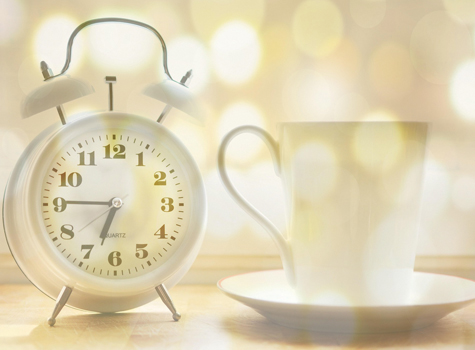
The concept of time is a topic that many discuss through various ways. Before Einstein officially declared that time is relative, many were under the viewpoint that time was a standard construct, and it flowed the same everywhere. Stephen Hawking is a well-known scientist and wrote a book called “A Brief History of Time.”
So, what is time? How do we know what time to get to our class or what time we should start work or even what time to get up?
These days, people may take for granted that we have cell phones to be able to tell us what time it currently is. But prior to modern technologies, how was it determined how much time elapsed from point A to point B? Humans may have looked up at the sun to wake up naturally; some may have performed a sun salutation before going about the rest of their day.
Then at night, they may have seen that the sun was in a different part of the sky, and so may have started determining that it was time to “close up shop.” The sun would have been the day’s “timekeeper.” It is interesting to know that the world’s largest stone sundial is in Jaipur, in the state of Rajasthan in India (turn to the cover of this issue).
In the nighttime, if one understands how to look at the stars, it could also be determined what the specific time it may be due to the position of the stars.
For a dancer, understanding time is very important. But how does the dancer know how to keep time and who helps them in keeping time? This brings in the importance of the natavangam and the nattuvanar.
The word “natavangam” is composed from two words. It is a combination of “natanam” and “angam” which in a composite can mean a part of the dance.
The word “nattuvanar” then can potentially be separated into parts of the words “natanam” and “avar” – which when combined into a single word can denote a person (traditionally a male) who helped keep the timing and rhythm of dance. For those attuned to the body, an analogy to help understand this is thinking about one’s own heart.
The Sinoatrial Node is the electrical pacemaker of the heart, that produces signals for keeping the rhythm and rate of the heart. If one listens to the heart with a stethoscope, one may be able to determine what may be the “normal” rate, or how fast the heart is beating. A heart rate that is between 60-100 could be noted to be within a normal rate range.
With this analogy, the nattuvanar is the one producing the “electrical impulse” for the music and dancer. The nattuvanar will use different instruments for keeping the rate and the rhythm of the dance which could include a wooden block and stick that is tapped on as well as cymbals.
The voice is another instrument that is used for saying the “sollakatu” for specific jathi. Going into some theory, the first thalam, known as “Adi Thalam” will be explored.
In classical Indian music, this specific Thalam has 8 total Aksharas or full counts that can be seen with the movement of the hand, and 4 “matra” within each one count. A cycle gives a total of 32 total beats.
So, with that count of 8*4=32, let’s look at the “Pancha Nadai” (Five Walks) or the Thatti Mettu in the music/dance system within Bharthanatyam.
The five within this series is “tisram” with three beats (tha/ki/ta), “chatushram” with four beats (tha/ka/dhi/mi), khandam with 5 beats (tha/ka/tha/ki/ta), mishram with 7 beats combining both the chatusram and tisram, and finally sankeernam with 9 beats combining chatusram and khandam (tha/ka/dhim/mi/tha/ka/tha/ki/ta).
There are various combinations within this example that can be used to get to the count of 32. The way that these patterns get formed depends on the expertise of the choreographer and the dancer.
Just within this one example, one can come up with a mathematical formula to see how many diverse patterns can be created. Going back to the analogy of the heart, if one is trained, one can learn to hear different sounds of the heart and determine what is “normal” vs “abnormal”.
For instance, if the number of beats per second is more than 100, the speed of the heart may be going too fast, or if it is below 60, it may be beating too slow. Depending on circumstances, the “choreographers” and “musicians” (i.e. healthcare professionals) may need to identify the root cause of why it is going too fast or too slow for the “dancer” (i.e. patient).
Maybe the person has too much caffeine which speeds up their heart rate – or if it is slow, maybe they are exceptionally healthy, and athletic. Maybe the slow heart rate may require further exploration to determine what could be the underlying issue.
In these scenarios, it is important that the healthcare team be “synchronized’ with the patient. In the same way, if something is “off” with the dancer or the musicians, they would need to work together to be able to perform where the music and dance is synchronized.
The show and its elements depend on the teamwork of the various players. This brings together the concept of time in general. In dance, we can see how the nattuvanar helps to provide a time marker for the dancer as well as making beautiful sounds and hypnotic rhythms so the dancer can provide the visual representation of how that specific marker of time is used.
The concept of time can be pondered through various mediums from the sciences, mathematics, as well as through the arts. It seems that there can be different ways to use time, and unique choreographies can be demonstrated within the individual item as well as the full margam.
The show may have seemed long when it started, but once the show ended, it seemed to go by faster than one may have thought. Some may go home and think that one show was enough. Others may be eager and awaiting to see another show.
Everyone seems to experience that time utilized differently. From an artistic perspective, a theory that could be identified from these experiences is that time is relative.
How one comes to that understanding can be varied, but it seems to lead to that “sum.”
Preethi Sriram is a classical dance enthusiast and lifelong learner of dance. Contact: srirampreethi@hotmail.com.