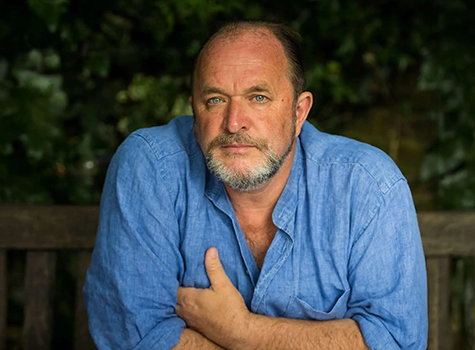

Samir Shukla
By Samir Shukla

We have arrived where no one has gone before. Us, the ever-restless species. Humans are always on journeys, treks if you will, through the vast lands and seas of our blue marble, and in the past few decades, it’s been off to outer space. We go on treks out of curiosity, necessity, seeking opportunities and greener pastures. Sadly, there are massive human migrations often escaping wars or injustice.
Speaking of these human treks, last month, September 2026, my favorite sci fi franchise turned 60. Star Trek premiered in September 1966 and helped birth a new world in science fiction TV and films along the way. It introduced ideas and concepts that seemed novel and weird at the time but turned out to be so succinctly real and commonplace. The series also featured a diverse cast, which was unusual in the TV world of that time.
When the original series premiered it was set about 300 years in the future. Now we are 240 years closer to that future since the starship Enterprise blasted off on TV sets. We have skipped, hopped and gotten closer to the future shown in the series.
Obviously, we haven’t built spaceships that can travel at warp speeds or transport humans from one point to another via the flick of a few buttons in transporters. But many technologies of Star Trek are here. A good part of that future is now here. Gadgets and diversity abound, while our ability to easily get to alien lands right here on our planet has become routine.
Now our imaginations are tinkering further with technology, and that science “fiction” is fast becoming fact. In the series the crew were on a mission to seek out new worlds and species. Now we have birthed a new species, right here on this planet, unseen in our physical realm, but one that is our intellectual equivalent.
This new species offers convenience and efficiency for now, but unless we wrap our heads around its limitless capabilities, it could also be our undoing. Humans have created our prime competitors. Our imaginary treks to the stars have arrived at a real present. The arrival of Artificial Intelligence.
AI has been with us for a while, but nothing like what has transpired over the last couple of years, fueled by the need to capture market share and the potential for vast riches. Companies and countries are tripping over each other thinking, “I can create AI that can beat up your AI.”
This transports me back to a childhood episode in a school playground where I overheard a couple of kids arguing that “my god can beat up your god.”
Star Trek is infused with aliens and artificial intelligence. The later variations of the series have plenty of walking talking AI in the forms of robots. The show takes place centuries from now, so that is understandable.
What about today? That future is here, at least the beginning of that future. And this one will evolve and accelerate very quickly, unlike our past tech advances. AI is now pervasive. It has the capacity to enhance our lives or cause utter chaos. AI will not eliminate all humans, as are the current fears of its own creators, but it can surely get rid of lot of us. We are highly inefficient compared to our new creation.
We have wreaked havoc on this planet, conquered it and redesigned it in our favor, eliminating many many species along the way. AI is the latest species that humans are trying to control and conquer. The tables are turned. It is already showing that it can deceive and conquer us. We have met our match, created by us. Sober minds must act now to get a handle on this beast, add guardrails, maybe add code of moral conscience in it if possible, or face chaos and peril.
AI is now at its most dangerous phase. It is going through puberty, typically the most restless phase for humans. All the signs are there of AI’s restlessness.
No one can guess how this trek will evolve over the next decade, let alone beyond that. Where this current technological journey will land is anyone’s guess. Conjectures and theories abound, but one thing is for sure. We have arrived where no one has gone before.
Samir Shukla is the Editor of Saathee Magazine
Contact: samir@saathee.com
X: @ShuklaWrites
Newsletter: ShuklaWrites.Substack.com