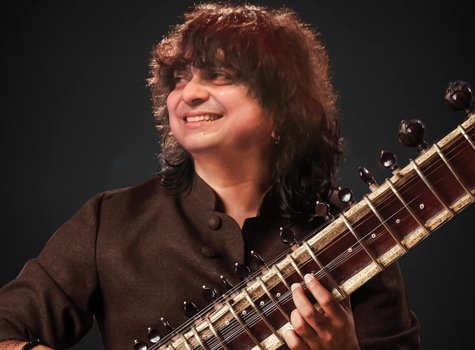

Dipika Kohli
By Dipika Kohli

‘You studied Japanese so that you could talk to us? About things like the rain and the ajisai?’
She meant the hydrangeas.
‘That’s right. “The colors, so richly blue, so saturated purple, with so many shades of those, and… the pinks! I’d never seen… “That’s what I’d wanted to say when I was a teen and in Japan in summer for the first time. But I couldn’t, I only had two years of high school Japanese… yes, well, thank you. My teacher was excellent, and strict, so yes, I did learn… but you have to start somewhere, and I didn’t have the words at the start. I didn’t even know they were called ajisai. Now I do. Now I say all that.’
She and I had just met outside, moments prior, on the pathway. Here we were again, in the nice park on the outskirts of Sapporo, walking in opposite directions on a lush loop I hear is quite snowy in winter. But this was August, and it was hot.
‘It’s hot, isn’t it. We Japanese… we love ajisai,’ she began to say in earnest, then her voice cracked. Only because I’ve been to Japan many times and have spent so much of those times with so many people here did I know not to say anything, here. You don’t want to interrupt silence.
After half a minute or so and having readied herself, she said. ‘Thank you,’ wiping a tear. ‘Thank you for learning Japanese so you could… talk to me. Because, English, no. No, I can’t.’ (Eigo wa dame… dame desu yo.)
And here I was. Aware of the plain real fact that I had achieved one of my old goals. To learn Japanese for the sheer purpose of being able to talk to people, like, just normally, back and forth, the way I’m writing this. And to be understood. And to understand. Isn’t that what teens want?
Back in Utsunomiya, a city in Tochigi prefecture, all those years ago, I was bicycling through rice paddies skipping school in the rain. It was too hard at school, no one understood me. So I vowed I’d learn Japanese.
Now, I could talk casually as I couldn’t then, and this was nice. Sometimes people ask me if I have roots here, which is quite surprising. In this instance, I usually say, ‘Himitsu.’ (Secret.)
Culture is the little things, I think, that pack together to make a place what it is, and silence is a huge part of Japan’s.
My short books, Kismuth, have been writings about ‘quiet space.’ Related? Probably. Japan had truly influenced me, and at a young age. Before the summer exchange program, I’d been to Tokyo as an elementary school student, on a family trip for a few days. Tokyo is big and colorful, but even as a little girl I could sense there was something about Japan that was… very quiet.
Maybe it’s not just about getting fluent in a language or familiar with a place, but the subtle things you pick up on that you wouldn’t have if you weren’t immersed in a faraway land for so long.
I told one person that you could have a whole conversation in Japanese like: ‘You know… Yeah… and the flow… And yeah…. those things.’ Because so much is said between the lines, in the nonverbal exchange, with eye contact or averted eyes, in the spatial distance between you and them. Words aren’t there. But so much other stuff is. To read the air, that’s a literal translation, is so very important when learning and speaking Japanese. It’s big, but you can’t get that from textbooks or apps. You must experience it.
Back in Phnom Penh again, somehow the clang of construction and smartphone noises that are everywhere all the time here make it hard to experience the quiet. It was good to go to Hokkaido. To remember my own preference for that.
On that day I met the nice older lady and her friend on the walk in the park, saying goodbye in the slight rain, we seemed to have more to say to one another but no need to put it into words. ‘It’s nice in the rain, isn’t it?’, I said. ‘The sound.’ A slight bow, bright eyes, an open smile: these were her reply.
Dipika Kohli is an author who is based in Phnom Penh. Discover her books at kismuth.com and other projects at dipikakohli.com.