

Girish Modi
By Girish Modi
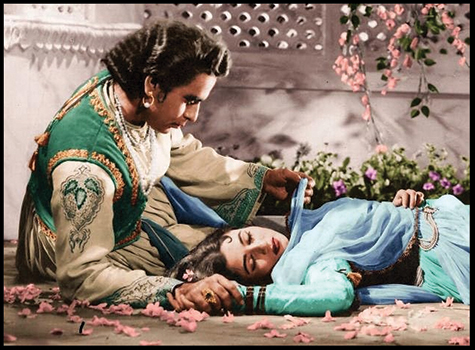
A still from the film Mughal-e-Azam, music composed by Naushad
In the golden age of Hindi cinema, a rare mix of talent gave rise to songs that didn’t just entertain but endured. Three legends stood at the heart of this emotional legacy: Lata Mangeshkar, Shakeel Badayuni and Naushad. Together, they crafted melodies that were not mere compositions but emotional rollercoasters of longing, love, betrayal and rebellion. While Badayuni’s poetry gave voice to women caught between desire and social norms, Naushad’s music sculpted their emotional terrain and Lata’s haunting voice turned these stories into living memory.
Let’s compare some of these songs one by one. In the song “Mere Jeevan Saathi Kali Thi Main to Pyasi” (Saathi, 1968), the heroine confesses emotional barrenness before love. Badayuni’s metaphors bloom with contradictions, while Naushad’s score glows with tenderness, and Lata’s voice radiates warmth. “Lagan More Man Ki” (Babul, 1950) similarly captures modesty and tradition. Naushad’s composition mirrors the heroine’s restraint, while Lata’s voice softly expresses her desire.
In “Ghoonghat Nahin Kholoongi Saiyan Tore Aage” (Mother India, 1957), the heroine chooses modesty over emotions. Yet, the classic song “Pyar Kiya to Darna Kya” (Mughal-e-Azam, 1960) is a melodic rebellion. The protagonist Anarkali declares love in the face of royal wrath In opposite end of the spectrum “Jo Main Jaanti Bisrat Hai Saiyan” (Shabab, 1954), the heroine laments hesitation that climaxes in lines “Ghoonghat mein aag laga deti.” It is rebellion filled with sorrow and sadness. “Na Shikwa Hai Koi” (Amar, 1954) is heartbreak without grievance. While Badayuni paints pain with restraint, Naushad lets silence speak and Lata’s voice hauntingly expresses emotional surrender.
“Dooba Tara ummidon ka sahara tut gaya” (Uran Khatola, 1955) is another heartbreak song where the woman is submerged in painful memory. “Khamosh Hai Khevanhaar Mera” (Amar) is filled with despair. The heroine compares herself to a drifting boat with no helmsman. Naushad’s orchestral composition in the end turns sorrow into emotional grandeur.
Naushad’s genius lay in his ability to give music into an emotional spectacle. Across some 65 films, he transformed sorrow into sculpture, yearning into cadence, and despair into immortal echo. His compositions were not just songs — they were spiritual invocations.
In “Aye Dil Tujhe Kasam Hai” (Dulari, 1949), the heroine consoles herself, urging her spirit not to surrender. In “Mohabbat Ki Jhoothi Kahani Pe Roye” (Mughal-e-Azam), Anarkali’s despair is imperial. “Khabar kya thi hoton ko seena padega” says the cost of silence is unbearable. Naushad’s music ties sadness into grandeur.
In these poetic lines, “Na Dekha Na Samjha”, the heroine turns philosophical, confronting betrayal and the collapse of hope.
In “Do Hanso Ka Joda Bichhad Gaya” (Ganga Jamuna, 1961), the heartbreak is spiritual. In lines “Gajab kiya Rama julm kiya tune” the heroine questions divine justice. Songs like “Naa Ro Ae Dil” and “Haale Dil Mein Kya Kahun” (Uran Khatola), and “Jaane Wale Se Mulaqat Na Hone Payee” (Amar) offer resignation as solace, accepting emotional ruin.
What made these songs immortal was the indivisible fusion of three forces: Shakeel Badayuni’s poetry that captured every shade of love and emotions. Naushad’s masterful compositions gave emotion its sonic landscape, from folk music to orchestral compositions.
And of course, these songs would have been ordinary if not for Lata Mangeshkar’s celestial voice bringing them to life for eternity.
Together, Naushad, Shakeel and Lata formed a trinity where melody, word, and voice became one. Their songs are not just musical artifacts, but they are emotional testaments. They haunt and connect generations, making them timeless. And in their symphony of feelings, the visuals, the sighs and the silence between lines become immortal songs.
Girish Modi is an 85-year-old retired engineer who is passionate about Indian music and classical dances. He donates money to various Indian organizations and provides free photo service. Contact: girish39@yahoo.com.