

Hiren Deliwala
By Hiren Deliwala
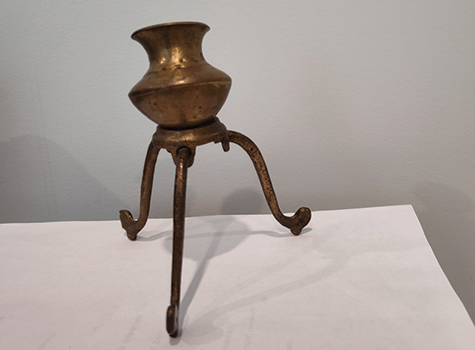
The hospital visiting hours haven’t started yet. I’m sitting outside on a plastic chair, the kind that makes a peculiar noise with every shift of your weight. Through the door I can hear faint religious music — my cousins have been playing it on a phone since last night. My uncle is in there. Sixty-five years old. Never smoked a cigarette, never touched alcohol, never used the masala tobaccos that are widely advertised and available in our city. My daughter, who is in medical school, told me there’s a saying among doctors: only good people get cancer. I’ve been thinking about that for two days.
When the doctors first started explaining his situation — the chemo, the infection that followed, the medications being delivered through IV and some orally — I did what any anxious relative with a smartphone does. I opened Gemini and started asking questions. What is this drug? What does this side effect mean? Is this timing right?
It helped. Genuinely. I understood more than I would have otherwise, and understanding felt like control. But somewhere in the middle of that second night, I realized something had shifted. I wasn’t just a worried relative anymore. I had become an unpaid medical monitor, cross-checking medications, tracking timing, flagging things to ask the nurse. The knowledge that was supposed to calm me down had handed me a new job, and with it, a new fear. What if I missed something? What if I didn’t ask the right question? The doctors were doing their best to translate complex medical language into something we could follow. That’s genuinely hard work. But now I was trying to do it too, and the gap between what I understood and what I needed to understand felt enormous.
We were still completely at the mercy of the staff. We just knew enough to be anxious about it.
Then there’s what no amount of information can touch.
My uncle has hiccups that won’t stop. Not the brief kind you can laugh off, but long, continuous hiccups that have been going on for hours. When he tries to drink water, he takes it in slowly, deliberately, like each sip requires a small act of concentration. He doesn’t complain. He just works through it quietly, while we watch.
There is nothing to do with that. You can’t Google your way out of watching someone you love struggle to swallow water. You can sit next to him, ask how he’s feeling, adjust his pillow. My cousin has wiped down the same surface near his bed three times this morning. Not because it needed it. Because her hands needed something to do.
Nobody prepares you for that kind of helplessness. Not the dramatic kind. Just the quiet gap between wanting to help and having nothing useful to offer.
And so we pray.
My cousins have been playing religious music since the first night. Someone brought a small, framed image and placed it near his bed. Prayers are being said at homes and a few relatives are organizing special pujas at the temple. From the outside — especially if you’re not from this culture — it might look like ritual for ritual’s sake. I’ve been part of this since childhood, and this time I find myself observing it more closely. Something specific is happening.
We pray because we have run out of other things to do. When you cannot fix the thing that needs fixing, you reach for what feels like action. Prayer is action. It is something when everything else has run out. My cousins aren’t naïve. They know the chants may not take the cancer away. But the chanting fills the silence, and that’s better than sitting around waiting.
Here’s what I kept thinking: we say the prayer is for him. Maybe it is, partly, but watch who relaxes after. Watch who feels they contributed something. The prayer is doing something real — just perhaps not what we tell ourselves it’s doing. It is keeping us from falling apart. It is giving us a way to feel like participants in something we have no control over. It is care directed inward, not outward. And maybe that’s okay.
I don’t say that to diminish it. If anything, I think that makes it more honest. We are not pretending to heal him with devotion. We are admitting, in the oldest language available to us, that we are scared, that we are here, and that we don’t want to give up hope.
My cousins and I are exhausted in the way that only hospital nights produce. We don’t say much. Someone gets tea. The music is still going faintly from a phone someone left inside. My uncle, a good man who did everything right, is in there fighting something that doesn’t care about any of that. And we are out here doing the only things left to us, and that is asking how he feels, wiping things down, offering him water, checking our phones for answers, and praying.
Maybe that’s enough. Maybe it has to be.
Hiren Deliwala is a Charlotte-based overthinker, closet philosopher, and avid board gamer. He writes about everyday life, Indian upbringing, and finding humor in the chaos. When not philosophizing over chai, he’s usually losing arguments to his wife and, shockingly, learning from them. Contact: hcdeliwala@gmail.com