
Anuj Chakrapani
By Anuj Chakrapani
Debutant director Keerthisrawan’s recent Tamil movie Dude opens with an incredibly funny sequence set in a wedding hall, where a man walks uninvited into the reception of his ex-girlfriend and demands an answer for why she dumped him. Things take a dramatic and absurd turn when he accidentally rips her mangalsutra and runs around the hall — even hanging from the ceiling — while the entire gathering, including the police, waits to pounce on him. The scene is staged like controlled chaos, quickly establishing the film’s irreverent tone towards the institution of marriage. In another scene soon after, we see the same man pull a prank on a couple, stopping the husband and quizzing him about his anniversary in front of his wife — subtly exposing how fragile public displays of marital perfection can be. Moments later, a surprise wedding proposal featuring the lead characters unfolds in a crowded train. If there were any doubts about what the movie is centered around, they are laid to rest within the first twenty minutes. Dude is about marriage — not in a solemn way, but through an outrageously absurd yet entertaining lens.
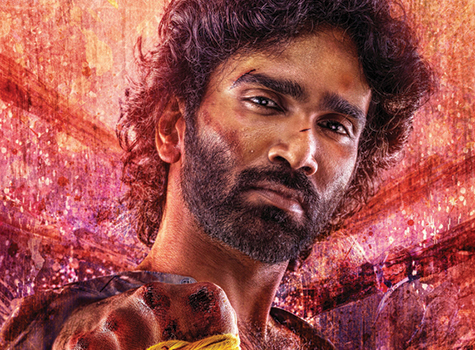
The “dude” in the movie is Agam, played by Dhanush-lookalike Pradeep Ranganathan, who pulls pranks on people and captures candid-camera-like moments. His profession is not incidental; it mirrors the film’s larger commentary on performance — both in relationships and in society. Things take a dramatic turn when Agam’s own life takes an unexpectedly prankish twist the day before his wedding. How he overcomes this to save his closest relationship forms the core of Dude — a film that is best experienced without prior knowledge of its mid-movie twist. The narrative cleverly places the prankster in a situation where he must confront emotional consequences instead of merely orchestrating them.
There is rarely a dull moment in Dude. When events escalate during the customary drive to the airport towards the climax, they are handled with a mix of maturity, humor, and practicality. Even in heightened situations, the film attempts to ground its characters in emotional logic. The fight sequence has unbelievable moments, yet the energy and pacing make them easy to overlook. A few sentimental moments in favor of Agam are generously thrown in, but they are never overly effusive, preventing the film from slipping entirely into melodrama. The movie briefly touches upon the practice of honor killing — a serious social issue — yet chooses not to dwell on it. Importantly, the film even calls out its own “cringeworthy” moments in a scene that is both self-aware and funny, reinforcing its understanding of contemporary romantic clichés.
Actor Sarath Kumar, who plays Athiyamaan, a minister and political bigwig, is terrific, balancing menace and humor with ease. His presence adds weight to the proceedings, ensuring that the stakes feel credible even when the situations border on absurdity.
Mamitha Baiju plays Kural, Agam’s cousin and the most important person in his life. Confident from the get-go, Mamitha matches Pradeep Ranganathan toe-to-toe and is never overshadowed by the lead actor. Her performance brings emotional steadiness to a film that thrives on chaos. Whether in emotional or comedic moments, she is terrific and, at times, steals the show. Towards the end of the movie, the way she snaps her fingers during a heated argument with Agam becomes a small but striking assertion of agency — stylish, yes, but also symbolic of her character’s clarity.
But the movie ultimately belongs to Ranganathan, whose histrionics form a major part of his performance. Whether it is the way he grabs his phone to take a selfie, snaps his fingers when he has an idea, or even opens a candy wrapper, his physicality defines the character. Depending on which side of the fence you are on, you will either enjoy this exaggerated style or grow tired of it. Yet it is undeniably deliberate. In his last movie, Dragon, he played a character who cheats his way to the top and ultimately destroys his career. In Dude, his character nearly destroys his relationships. Once again, he embraces a flawed protagonist — a choice that reflects a willingness to experiment within commercial cinema. He does not mind kissing a dog, even if he struggles to land one on the love of his life. Nor does he fully understand why his ex-flame dumped him. These contradictions make Agam both immature and oddly endearing. Ranganathan may well be one of the more daring mainstream heroes in Tamil cinema today.
Despite its stretches and slightly overlong climax, Dude offers solid entertainment — a wild ride about marriage that mixes satire, sentiment, and spectacle in mostly satisfying proportions.
Anuj Chakrapani loves music and cinema among all art forms. He believes their beauty lies in their interpretation, and that the parts is more than the sum. Contact: anuj.chakrapani@gmail.com.