
Anuj Chakrapani
By Anuj Chakrapani
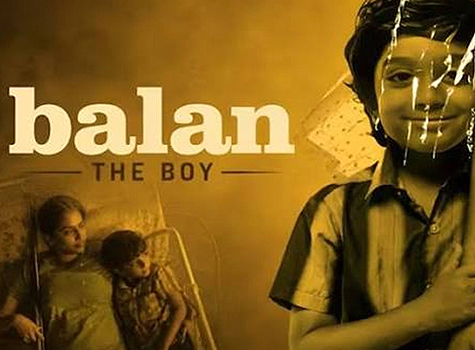
Malayalam movie Balan: The Boy opens in a prison, from where a seemingly inseparable mother and son are released. Played by Farzana Palathingal and Adhisheshan K R, the duo assume one identity after another as they move from one precarious situation to the next. There is an irony to their predicament: they are technically free yet seem far less safe in the outside world than they were behind prison walls. Amid the uncertainty, the film gradually reveals the powerful bond between them. The stories the mother narrates, their long walks from town to town, and their silent understanding all add up to a relationship that feels deeply lived in. There is an undercurrent of suspense throughout, as we become invested in their bond while constantly wondering whether they will ever find a place where they can feel safe.
Much of the film’s emotional strength comes from the chemistry between the two actors. There is an ease to their performances that makes their relationship feel completely natural, with neither actor ever overplaying the affection or dependence between them. Their chemistry becomes especially effective because the film allows the relationship to breathe rather than constantly underlining its importance. It gives the first half an almost fable-like quality, as the mother and son move through unfamiliar places, encountering strangers and dangers along the way. Yet the warmth of these moments is constantly accompanied by the nagging feeling that something darker is waiting to emerge.
The film cleverly juxtaposes scenes one after the other. When the boy asks his mother if she is capable of hurting someone, we immediately cut to a scene where the elderly lady she has encountered needs help with her medication. Similarly, when the mother settles scores with an adversary, we cut to her son being applauded by his classmates and teacher for a piece of work. These transitions do more than simply move the narrative forward; they place the mother’s increasingly dangerous existence alongside the boy’s innocent world. It is this gradual accumulation of moments beautifully stitched together, backed by fine writing and excellent performances, that makes the first half such a terrific watch.
One of the finest stretches comes when a passerby questions the mother about her deceased husband, including the vehicle he used and the house they once lived in. The interrogation happens with the boy kept away, making the scene nail-biting as we wait to see if he will repeat what his mother has told him. A single wrong answer could spell danger. Soon after, the mother assumes the identity of a mentally unstable nurse and lands a job as a caretaker for an elderly woman. Dolly June is terrific as the old lady, and this portion brings together humor, suspense and emotional warmth in satisfying proportions. The relationship that develops between the three becomes another extension of the film’s central theme — the unlikely bonds that people form when circumstances force them together.
The film’s treatment of its women is equally striking. The mother is steely in her resolve to protect herself and her son, yet she does not shed a tear well into the film. Her strength is conveyed through action and restraint rather than dramatic declarations. The old lady, too, turns out to be far more formidable than her initial appearance suggests. The film’s only rifle is in her hands, wielded by two other women — not the police. Even the mother’s most dreaded adversary happens to be a woman. Without turning these details into a lecture about female empowerment, Balan: The Boy quietly creates a world in which its women possess both inner and outer strength.
And then the mother and son are separated.
That separation is what sets up the actual mystery of Balan: The Boy. Does the mother have a hand in a double murder? Is she really where we hear she has landed? And will the two ever meet again? The fascinating first half gives way to a significantly different and unpredictable second half, where the emotional warmth recedes and an elusive hunt takes over. The boy has grown a little, and a new set of secondary characters gradually takes over the proceedings.
For a while, this can feel like watching two different movies. The mother and the old lady, whose presence made the first half so emotionally engaging, are no longer around in the same way, and their absence creates a noticeable void. The film becomes more about chasing clues, understanding what happened and figuring out where its characters have ended up. Yet, with some distance, the structural choice makes sense. Time has passed, the boy has grown, and several of the characters who shaped the first half have either vanished or died. The film’s changing emotional landscape is therefore not merely a departure from what worked earlier; it is also a consequence of the story it has chosen to tell.
The mystery remains unpredictable enough to sustain interest. The film keeps moving through its questions rather than offering easy answers, and the eventual resolution is both unexpected and deeply satisfying. The climax brings together the two things that the film has been quietly building towards — the fate of the mother and son, and the mystery surrounding their journey. When the pieces finally fall into place, there is full emotional payoff.
At its heart, Balan: The Boy is a story about hope disguised as a suspenseful journey. Its characters are constantly on the move, hoping to find a place where they can finally feel safe and at home. Yet beneath the danger is an uplifting spirit, particularly in the way the mother and son cling to each other through uncertainty. The film’s greatest achievement is that it makes us yearn for their safety long before we fully understand where their journey will take them. And by the time we reach the end, we realize that the mystery was never merely about what happened to them, but about whether their bond could survive everything that was thrown their way.
Anuj Chakrapani loves music and cinema among all art forms. He believes their beauty lies in their interpretation, and that the parts are more than the sum.
Contact: anuj.chakrapani@gmail.com.